

Envisioning a Regional Destination for the Lower Cape Fear
Eagles Island Nature Park
Project Summary
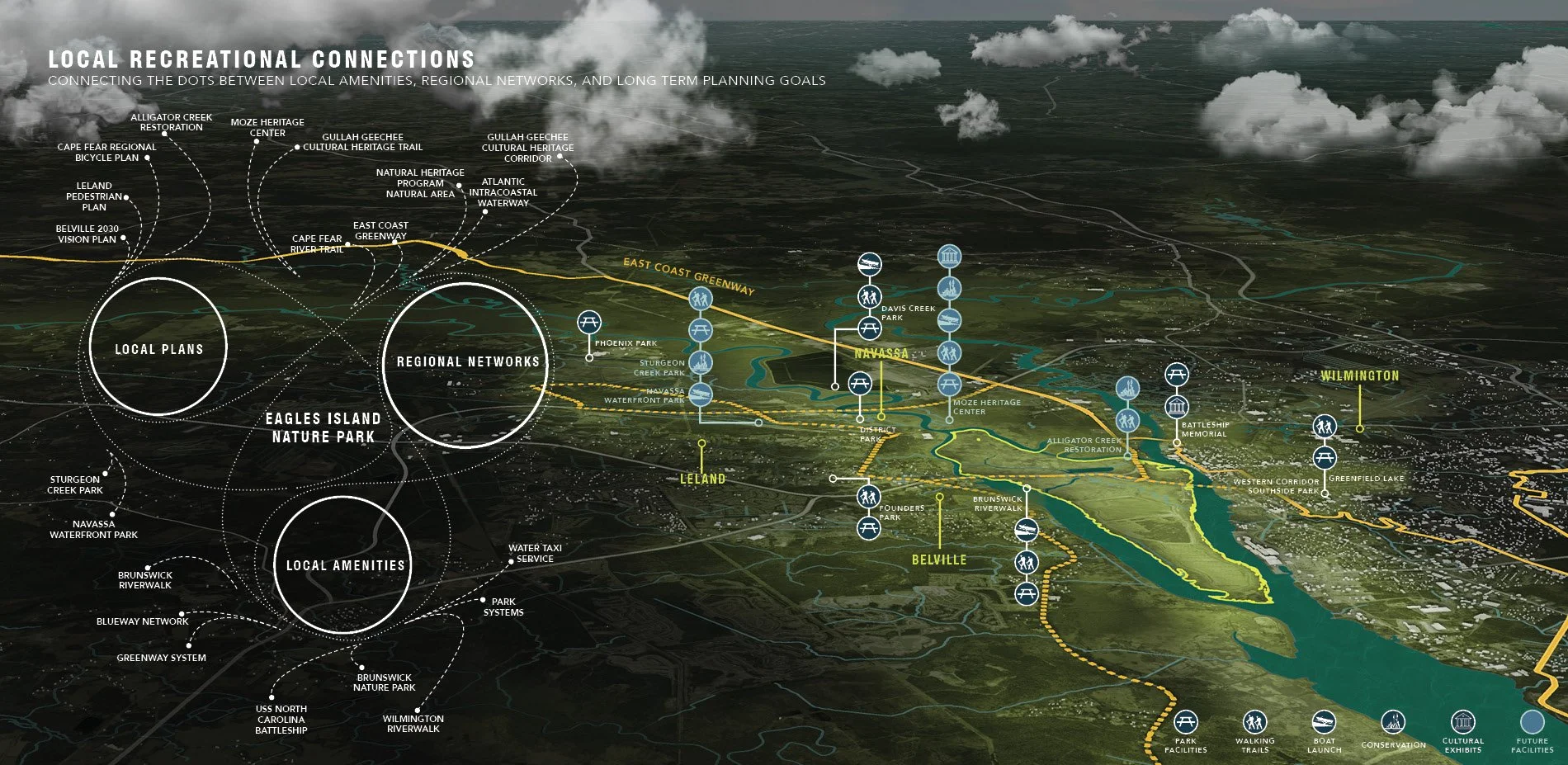
The Eagles Island Nature Park study was developed in collaboration with a large coalition of partners and stakeholders. The goals of the project were to investigate, situate and communicate the vision for Eagles Island Nature Park, illustrate potential future conditions and user experiences, and celebrate the unique ecological and cultural values that support long-term conservation of Eagles Island. The report comprehensively describes the opportunities and public benefits associated with the park vision, and is strategically designed so individual sections and exhibits can be extracted and shared in presentations and promotional materials to advance the project.
Situated between the Brunswick and Cape Fear Rivers, Eagles Island has a rich natural and cultural history and has played an integral role in the ecological significance, commercial development, and industrial activities of the Lower Cape Fear Region.
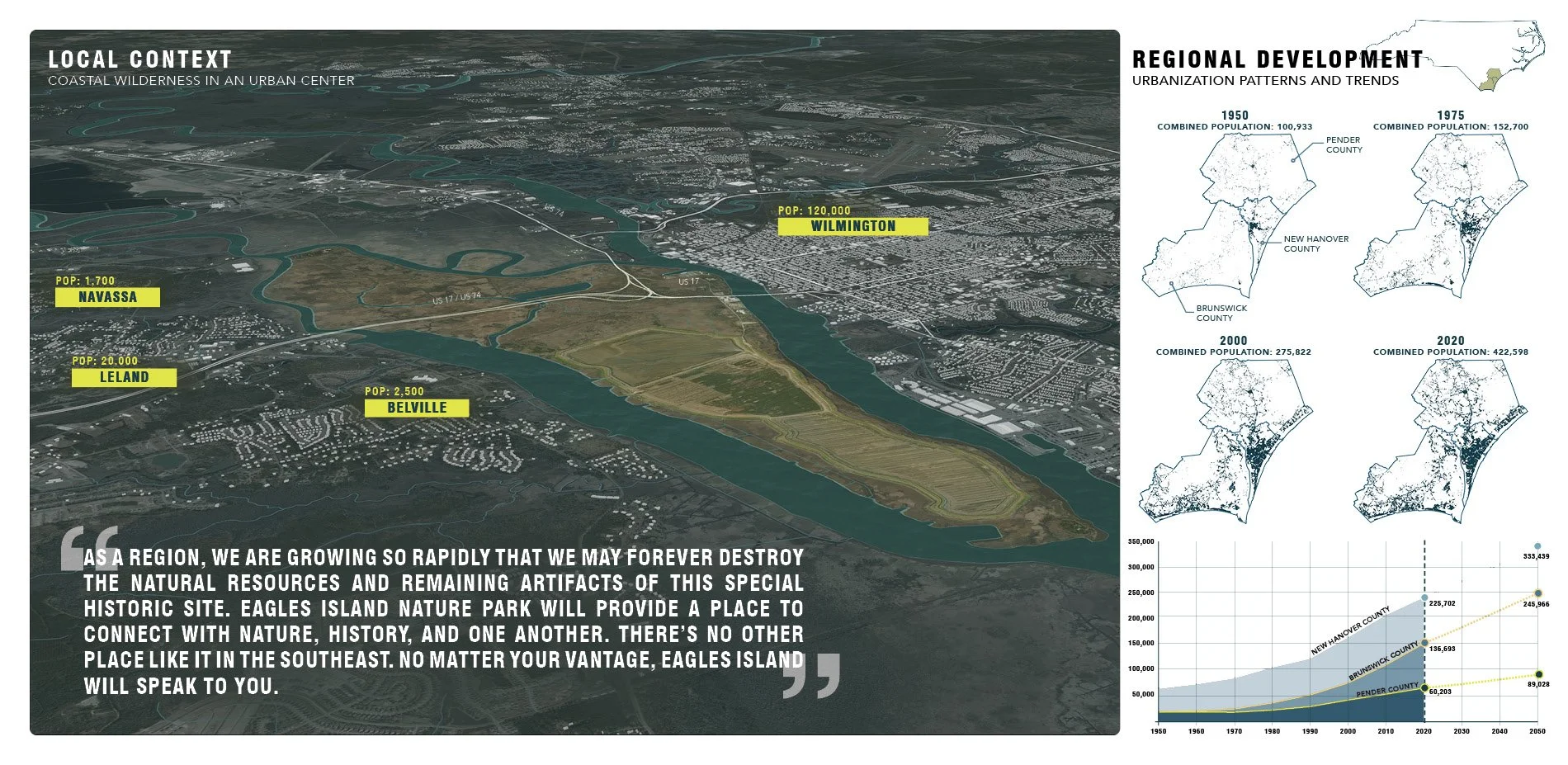
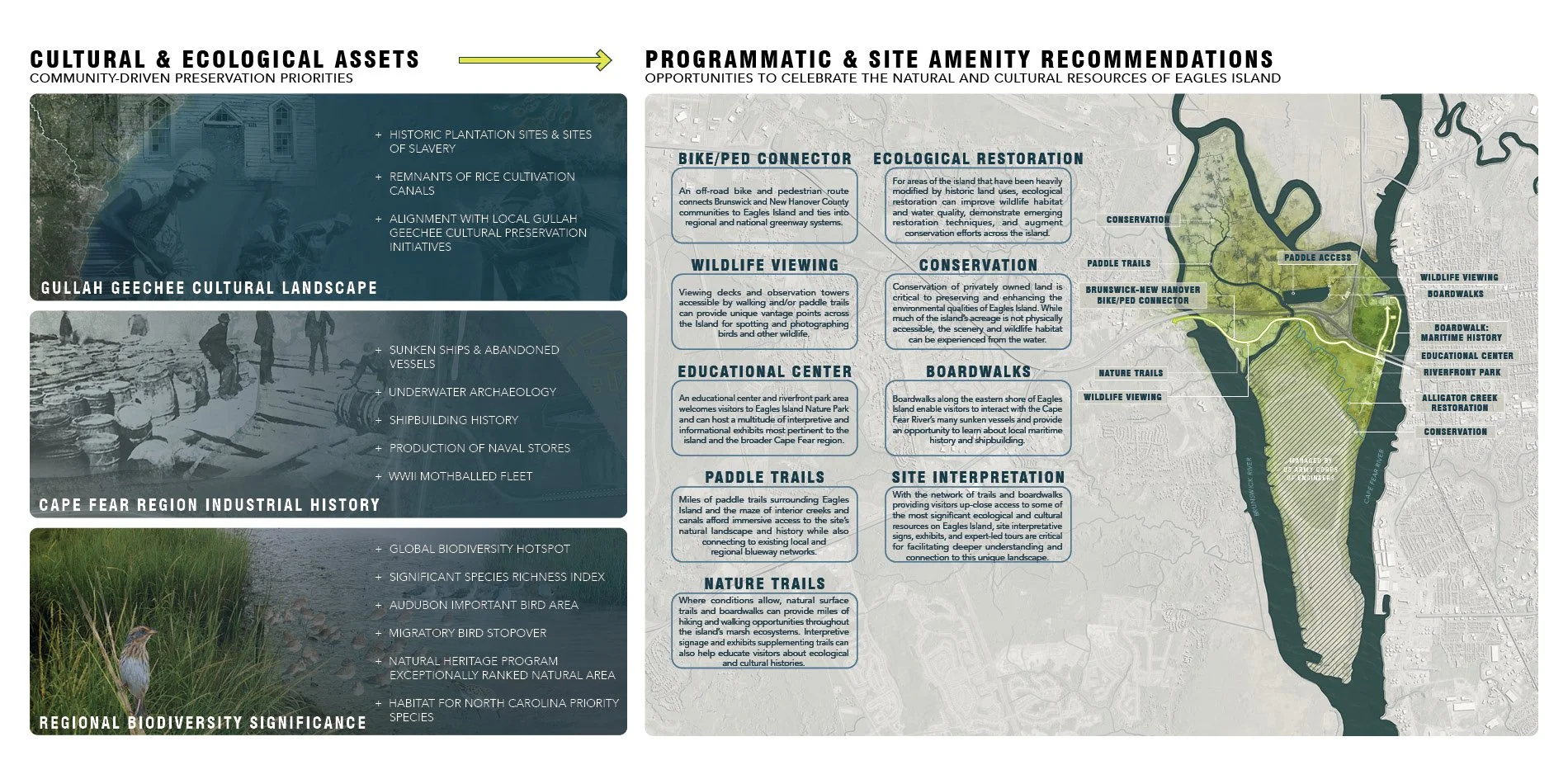
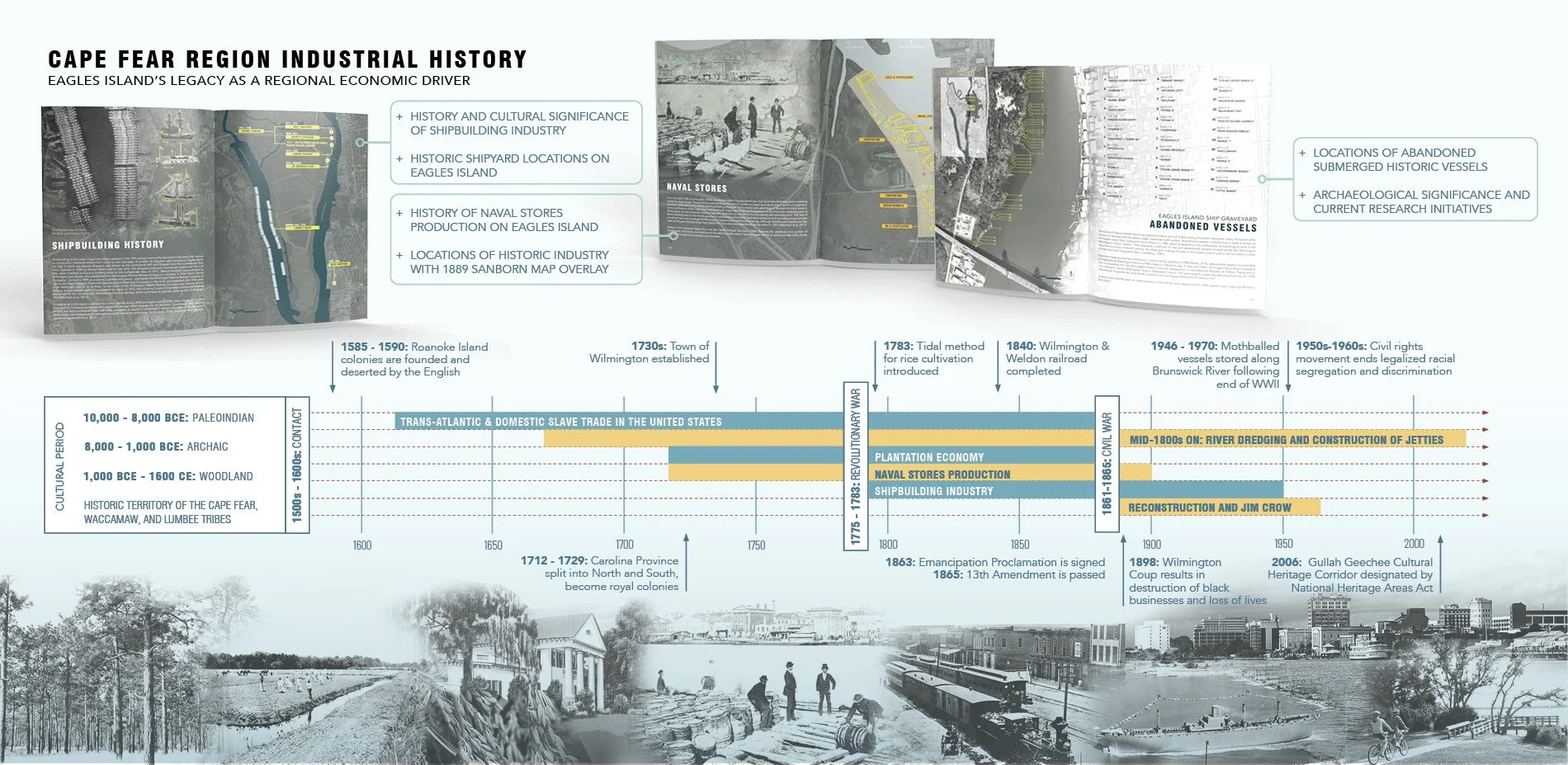
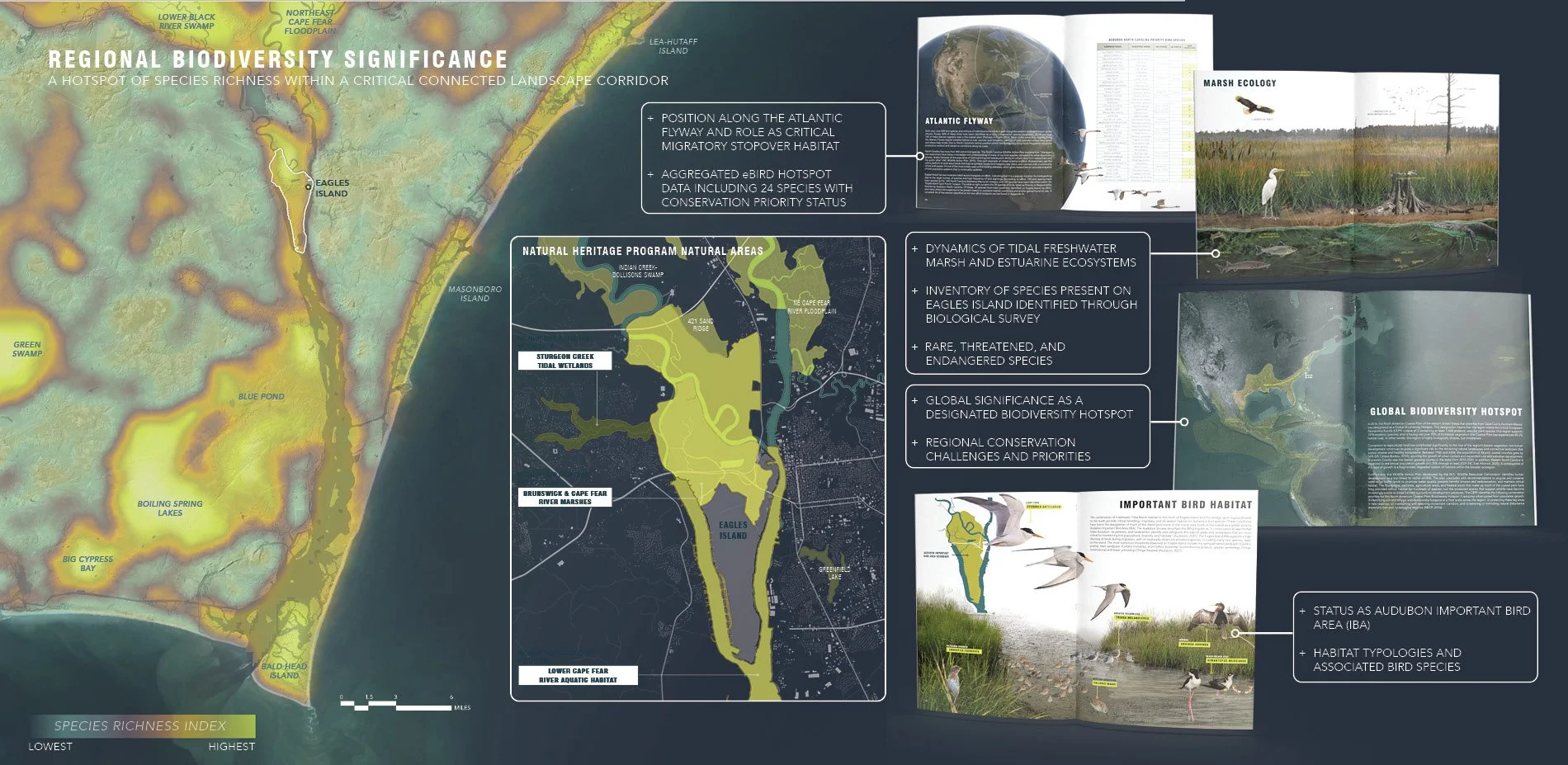
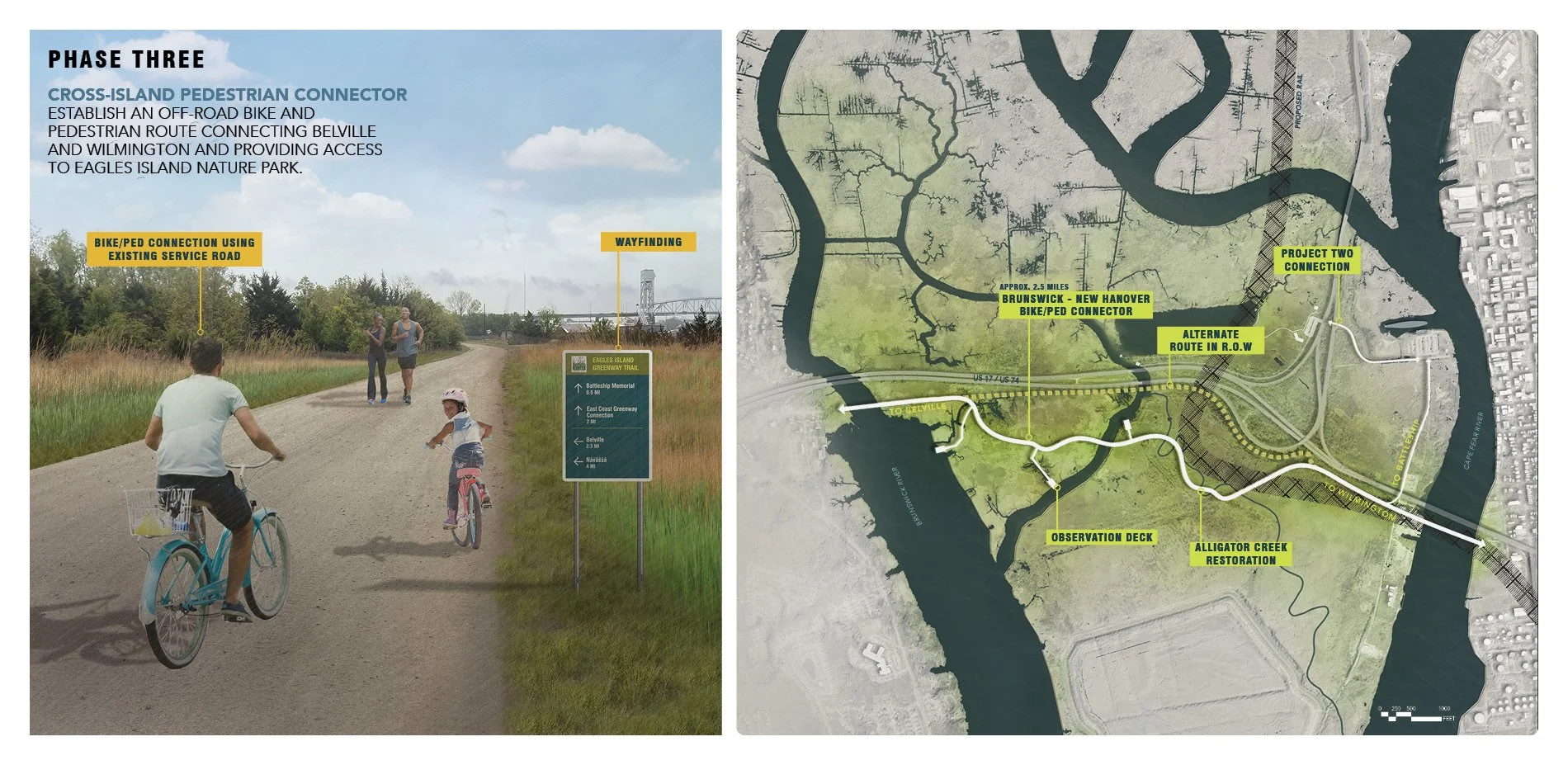
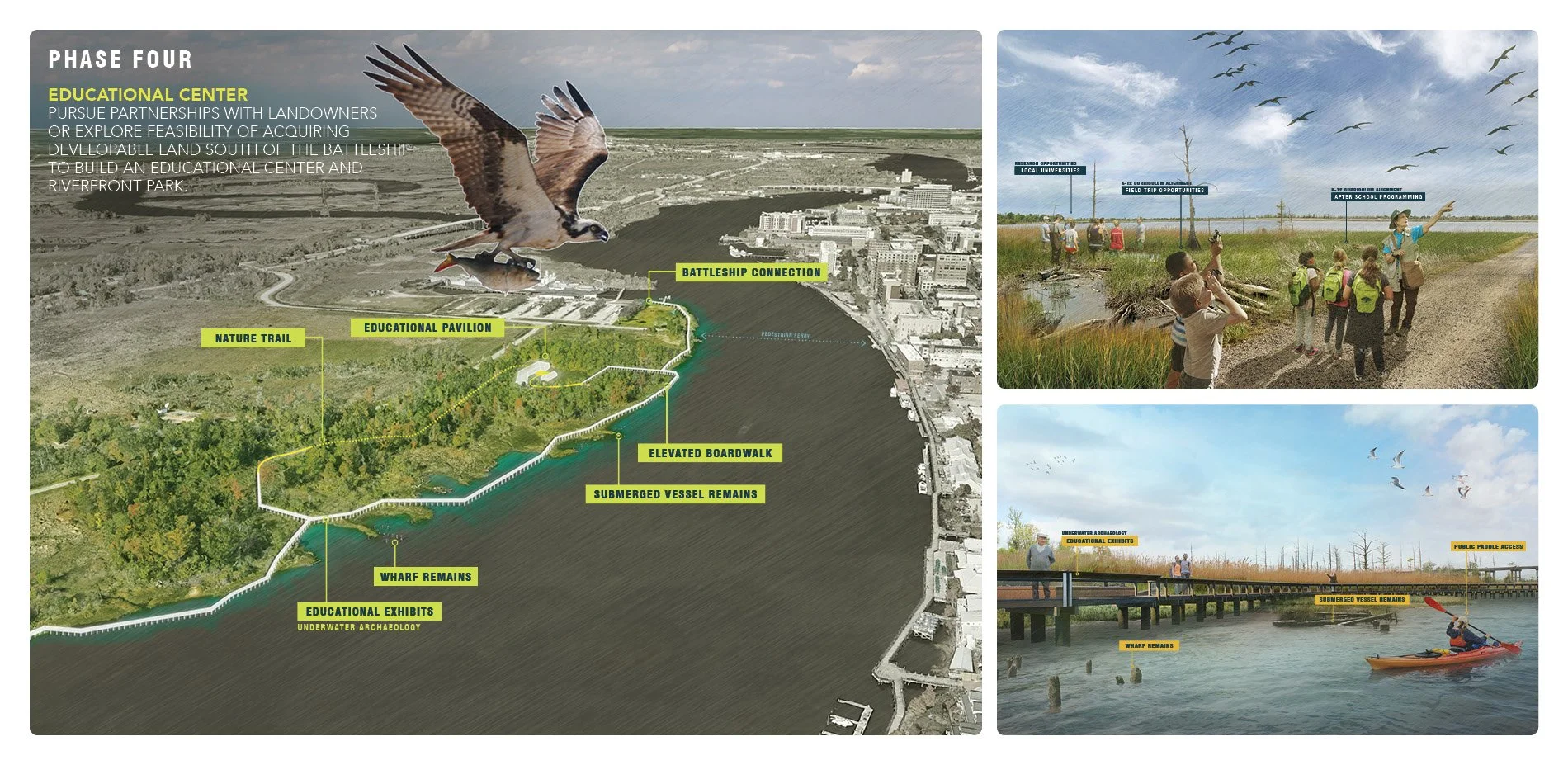
The 3,110-acre island is located 22 miles upriver from the mouth of the Cape Fear River. Downtown Wilmington is located on the eastern side of the island, just across the Cape Fear River. To the west, Belville, Leland, and Navassa lie just across the Brunswick River. Over the years, Eagles Island has supported surrounding populations through the provision of natural resources (hunting, fishing, and timbering) and has seen agricultural (rice) and industrial (naval stores and shipping) uses. Currently, almost 1,500 acres in the southern area of the island are managed by the U.S. Army Corps of Engineers as a disposal site for dredge spoils, and this area is also used as habitat by myriad shorebirds. To the north, where portions of the island are in conservation, the tidal freshwater marsh habitat is designated as a Natural Heritage Program Natural Area. Remnants of hand-dug ditches and canals reveal the island’s history as a significant agricultural site for rice cultivation, including recognizing the important role enslaved Gullah Geechee growers played in building enormous wealth within the region. Sunken and abandoned vessels along the eastern shore of the island tell the story of Wilmington’s economic growth and industrial past. While the environmental conditions, artifacts and historical records speak to the critical role Eagles Island historically played in the ecological and cultural development of the Lower Cape Fear Region, they also highlight the resources and opportunities for Eagles Island to provide ongoing public benefits for local populations and the region as a whole.
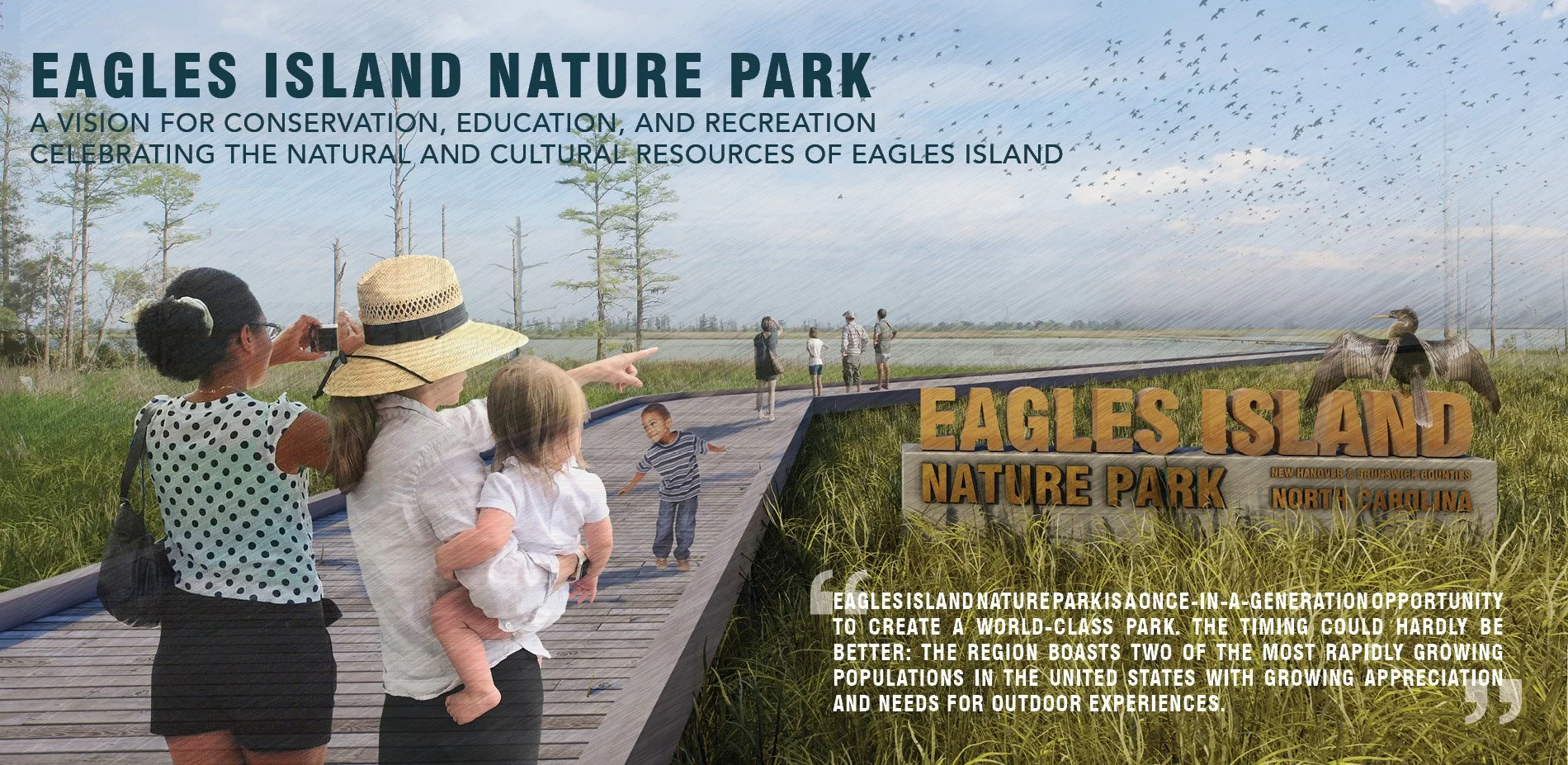
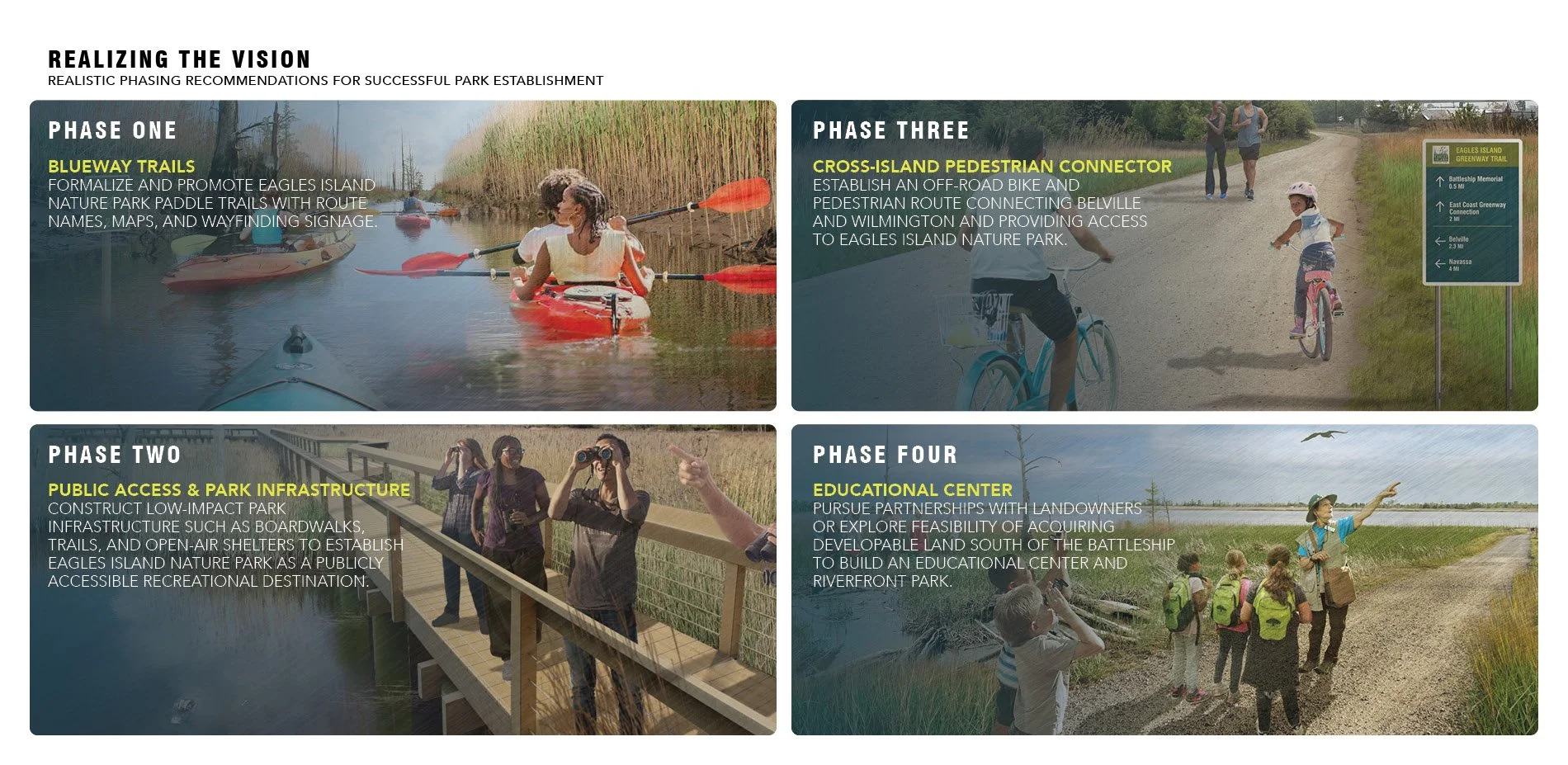
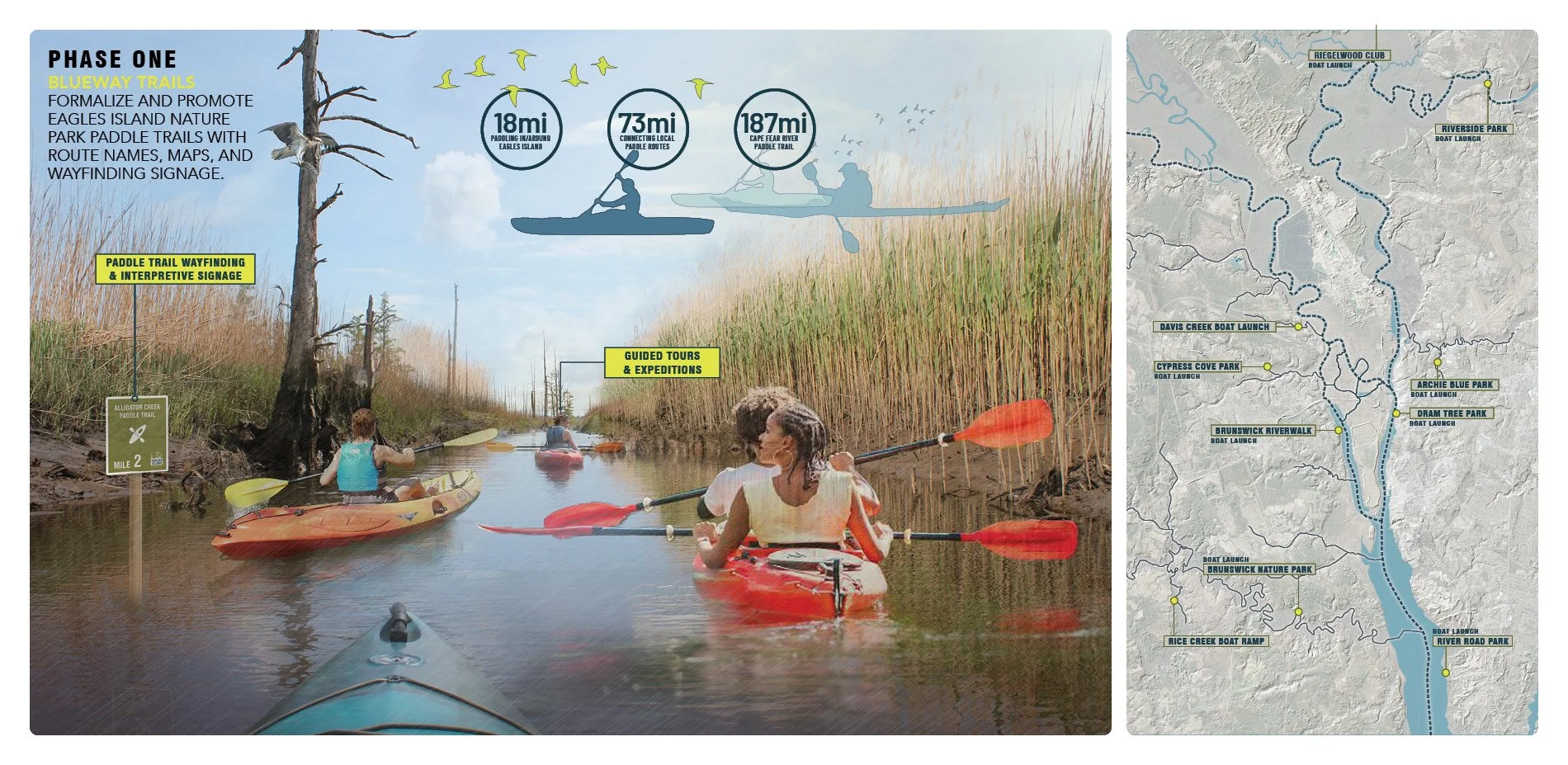
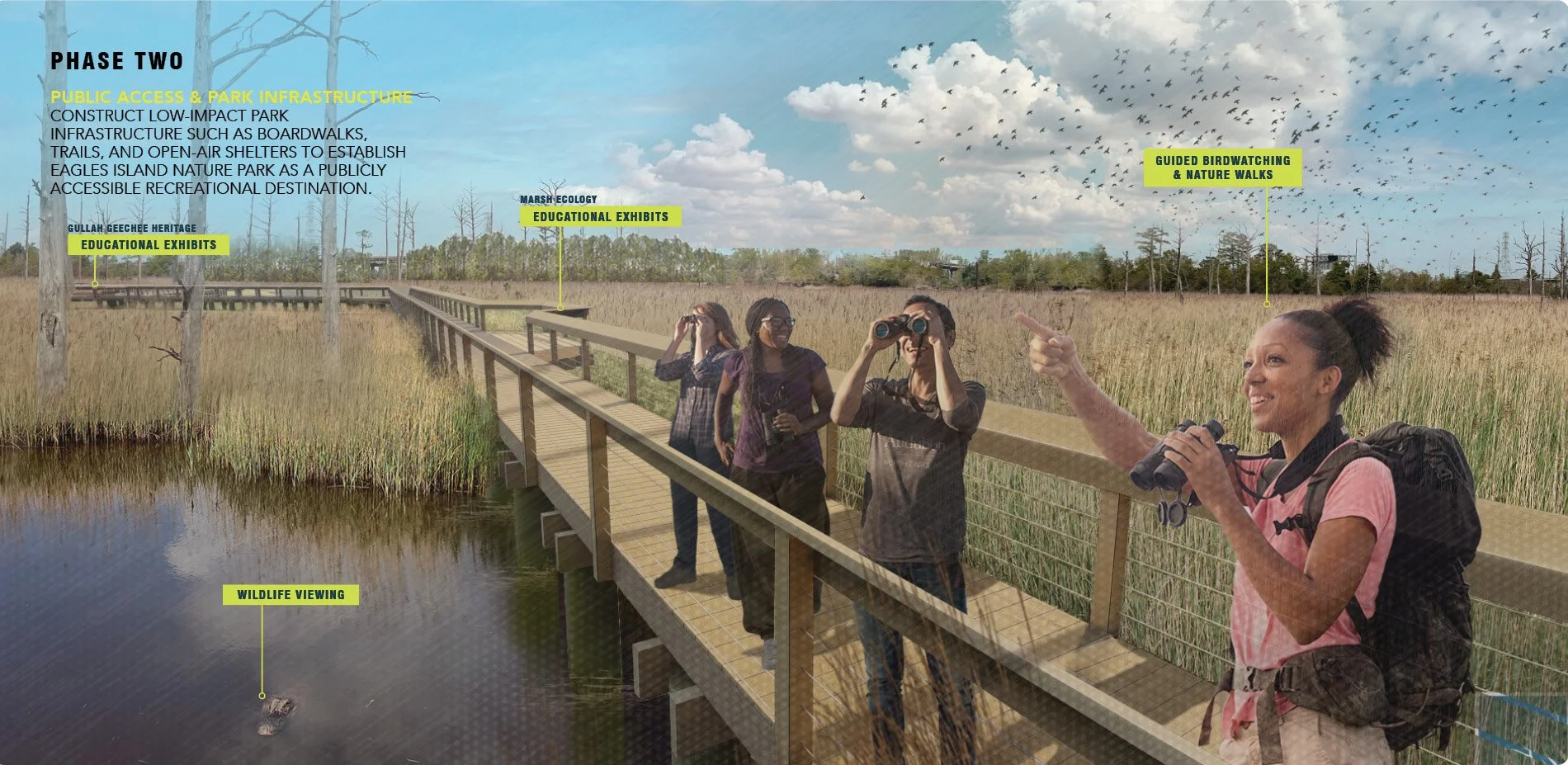
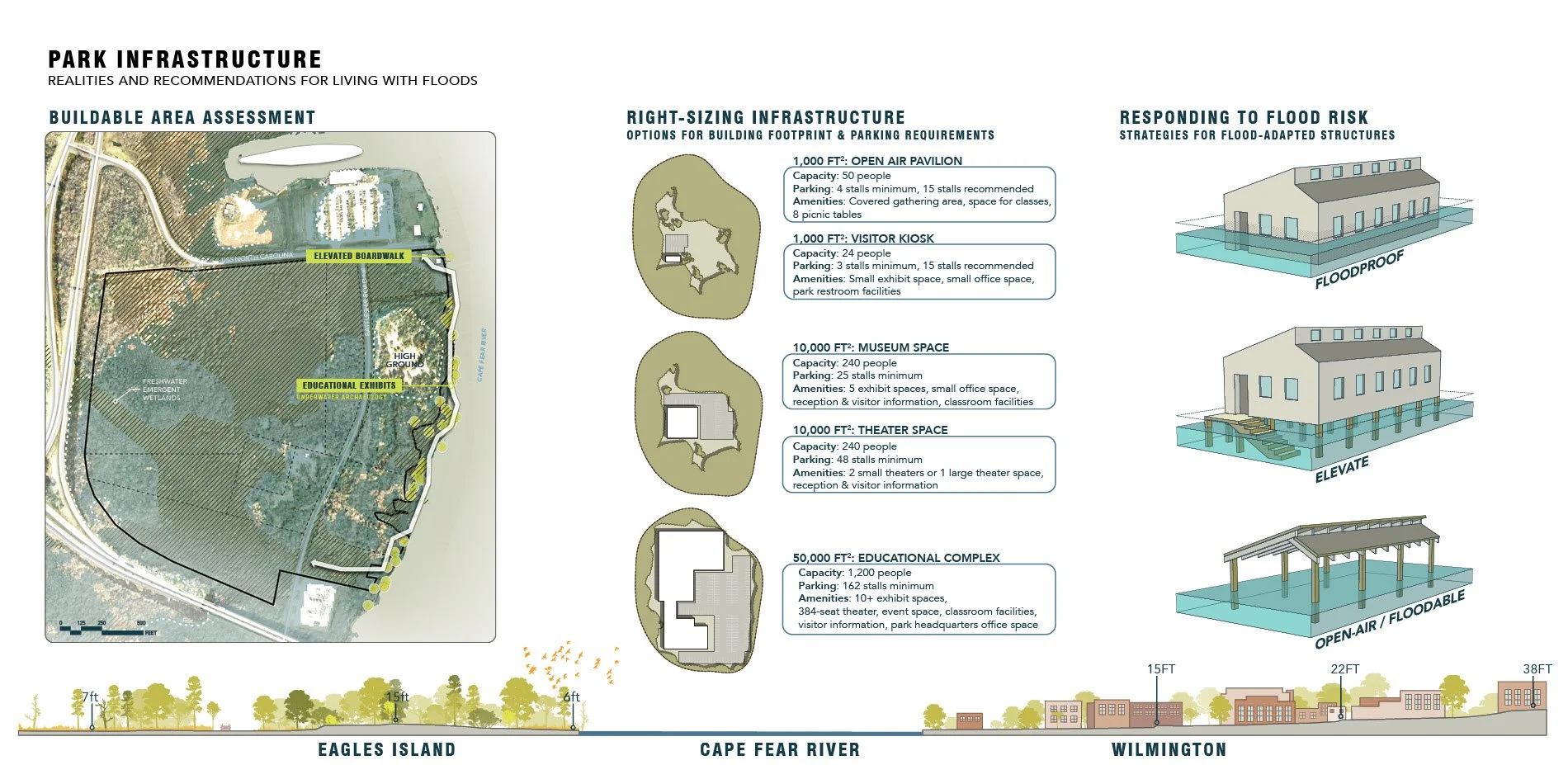
Eagles Island Nature Park is centered within two of the most rapidly growing counties in the United States, with a growing appreciation and need for outdoor experiences. Establishing the park amplifies the area as a coastal destination that also holds valuable historical significance. Residents can access it easily, and it’s an area that families will travel to experience. Walking paths, marsh boardwalks, bike trails, birdwatching, kayaking, a harbor loop, and an exhibition and education center will commemorate the people and the stories that have shaped the region, state, and nation.
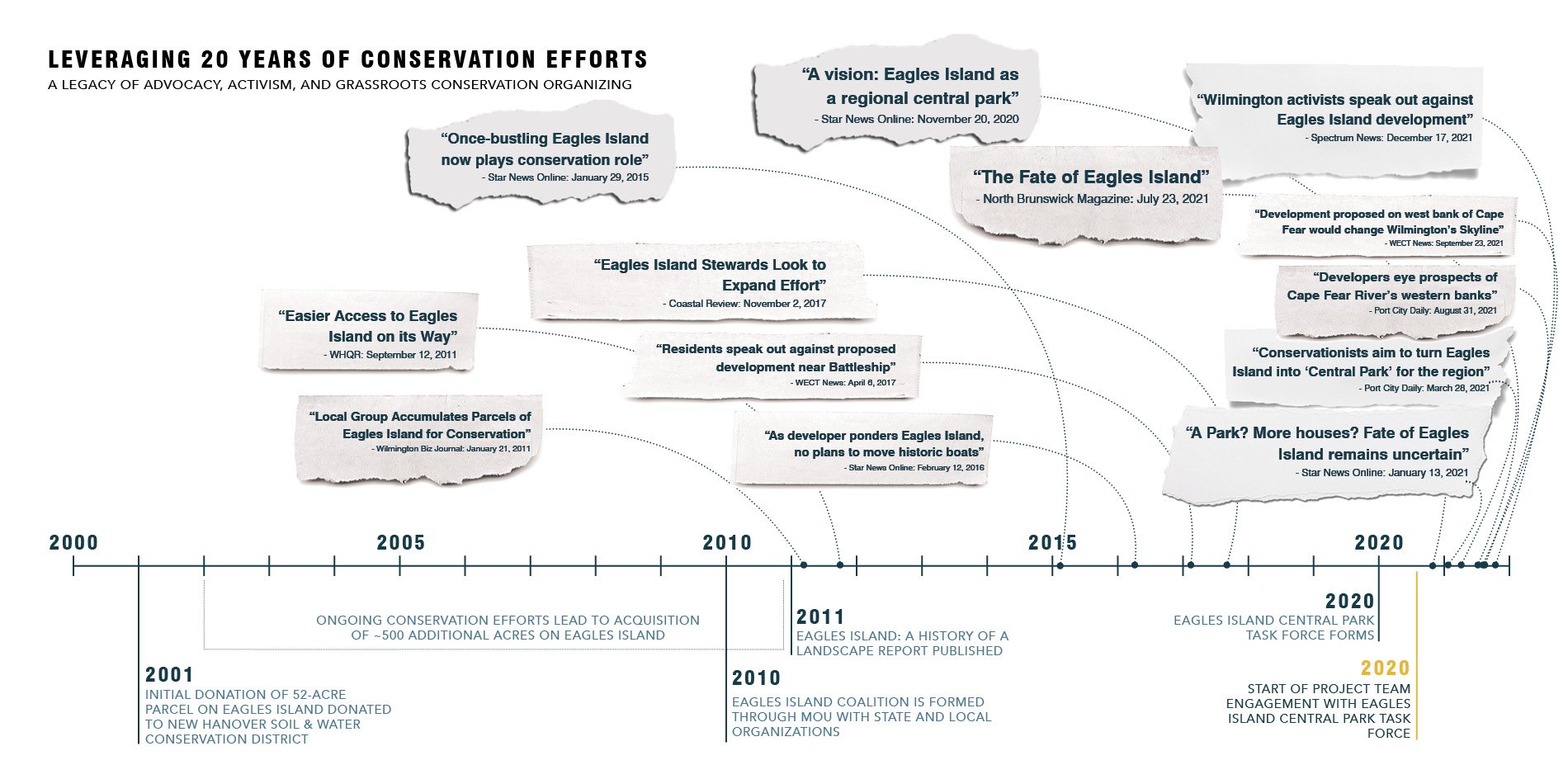
The effort to preserve Eagles Island has been ongoing since 2001. To further conservation goals for the Island, the Eagles Island Central Park Task Force (EICPTF) was established. The EICPTF is composed of members from 40+ organizations who represent diverse backgrounds and interests with the common goal of establishing the park as a world-class recreational destination. This group envisions a park that brings joy to all people, where the past informs the present, meets the future, and people can learn to thrive with nature. As demonstrated in a quote from the EICPTF, the processes and products generated by the project team have been critical in advancing these goals:
“Our task force has relied on the project team to put feet to our vision to preserve Eagles Island as a nature park focused on education, recreation, and conservation. With the project team guiding us through a project-defining and consensus-building process, the “vision book” has proven to be an extremely useful tool as we pursue this long-term goal and project.”
Sample Images


Project Start Year
2021
Location
Eagles Island, NC
Awards
2022 Honor Award in Communications: Eagles Island Nature Park: A Vision for Conservation, Education, and Recreation, North Carolina Chapter of the American Society of Landscape Architects